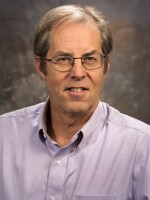
This spring is the 35th anniversary of the Cheyenne Chamber Singers. For the celebration, artistic director and conductor Sean Ambrose chose a performance of Andrew Lloyd Webber’s “Requiem.” Wyoming Public Radio’s Grady Kirkpatrick sat down with Ambrose to learn more about the performance and his own history with the Cheyenne Chamber Singers.
Editor’s Note: This interview has been lightly edited for length and clarity.
Grady Kirkpatrick: The Cheyenne Chamber Singers are getting set for a performance of Andrew Lloyd Webber's “Requiem,” and that's on Saturday, March 21. Give us a little bit of background on that composition.
Sean Ambrose: Most people know Sir Andrew, as it were, from his musicals, “Jesus Christ Superstar” or ”Phantom of the Opera,” and [the movie] “School of Rock.”
“Requiem” was written following the death of his father. I believe his father passed in 1982 and the “Requiem” was premiered in 1985. Actually, the premiere was in New York. Sarah Brightman, who was his wife at the time, was the soprano that he wrote it for, and it also has a tenor soloist, Plácido Domingo.
We're not lucky enough to have him with us on this one. We have great soloists.
So the work itself, of course, was outside of his norm. And as with any composer, when you write something that's different from what the public is used to, reception is mixed. However, it did win the Grammy [for] Classical Album of the Year in 1986.
This work, the reason I chose it, honestly, I was a sophomore at the University of Wyoming when this was released. I first heard it, and I was raptured by it then, and I've been wanting to do it ever since. For those of you counting, that was a while back.
This work is based on the Latin Mass, the Roman Catholic requiem Mass. It is entirely in Latin, which, of course, the Mass isn't done in Latin anymore, but musically it typically is. So it is a full setting of the Mass, but a very contemporary setting.
It includes what some people would consider classical style choral writing, but it also includes a lot of his influence of rock and roll and pop. It has a drum set and a saxophone in addition to the full orchestration that we're used to.
GB: And there's a portion of the requiem that is, I guess, most recognizable.
SA: The “Pie Jesu” [segment] became a very popular hit, especially in Europe. It's a duet between the female soprano and a child boy soprano, a young male whose voice has yet to change.
We're incredibly fortunate to have located a great soloist for our concert that's gonna take place in Cheyenne. I've got two folks that are faculty at CU Boulder, my soprano and tenor soloist, and also work with Opera Colorado. Our boy soprano is a student of a very good friend of mine, Dr. Ryan Garrison, who teaches at the Denver School of the Arts. One of his students is going to come up and be our boy soprano. Ryan's from Cheyenne, so we've got a bit of a Cheyenne connection.
GK: You've been with the Cheyenne Chamber Singers since 1993, just a couple of years after the group's founder, Dr. Jane Iversson. You started singing and then conducting, right?
SA: I've been singing with the group, and then I've been conducting for about the last 15 years.
GK: You were also the music conductor for the Laramie County School District, providing curriculum, guiding teachers and serving 12,000 students K-12 in Cheyenne's 34 public schools.
You retired in 2021. How about a few of the highlights? That was a long run.
SA: I am from Cheyenne. I'm a native of our fair state, and I'm proud of that. My first teaching job was actually down in southwest Kansas after graduating from UW. Then I was the band director at Central High School starting in 1990. Loved that.
But the opportunity for an admin job came up, and I was like, I'll do that for a couple of years. And then 30 years later, central office administration isn't for everybody. But I loved working for the teachers that were working with the kids. Cheyenne was so blessed to have and still is blessed to have an incredible music faculty, and for me, in that job, I was able to do some of the public-facing of the work.
The highlights over the years: Doing some of the citywide concerts or helping the concerts that Cheyenne Symphony does for our 5th and 6th graders, where we bring in literally 300 5th and 6th graders in one day, two concerts, and have all those kids come in and watch that and be able to help facilitate that.
Of course, taking kids to all state [championships] and regional festivals and just supporting the teachers and bridging the gap between community music, which is what chamber singers is, and school music. That intersection is where I live.
Even now that I'm retired, I still keep my fingers in that quite a bit.
GK: That's great to hear. And thank you again for coming in today. We've got Andrew Lloyd Webber's “Requiem” set for March 21. Is that taking place at the Civic Center?
SA: It is at the Cheyenne Civic Center. Tickets are available through the Civic Center Box Office.
We are being joined by members of the Cheyenne Symphony, and we're also excited that we've got students from all three Cheyenne high schools and from the LCC [Laramie Community College] joining us.
So it is Chamber Singers, but we've expanded it to include young people too, to bridge that gap between the schools and adults in the community, making music. I'm really excited about that part of it.