-
 Deaths and close calls while fighting wildfires have strained an already on-edge workforce. They've also raised questions about policies and priorities amid an intense wildfire season.
 -
 The faster a fire burns, the more severe its ecological impacts. That's one of the findings of a new paper in the journal Science Advances. Climate change only promises to further accelerate those fires, according to its lead author.
 -
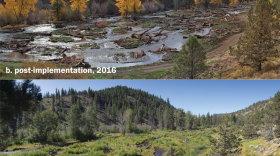 So-called process based restoration (PBR) has a number of ecological benefits. But it can make ecosystems more resilient to wildfires when they come, and better able to recover in their wake.
 -
 Giant sequoias only grow naturally in California today. But they once ranged as far east as Colorado, Wyoming and Nevada, before the climate turned drier and pushed them into their current, narrower range.
 -
 Prescribed fires can reduce wildfire risk while also improving wildlife habitat, according to a new study from the Nature Conservancy.
 -
 Researchers looked at more than 750,000 wildfires in the West between 1992 and 2020. In the second half of that period, the number of reported wildfires were down by 31%, but acreage burned was up 40%.
 -
 One of the studies found that over seven recent years, U.S. Forest Service projects helped communities avoid $2.8 billion in fire-related harm.
 -
 When wildland firefighters are on prescribed fires, they’re breathing the same smoke and facing many of the same hazards found on wildfires, but they don’t get the same hazard pay. That could soon change.
 -
As wildfires get more intense, there are questions about how effective prescribed fire and other fuel treatments can be. New research suggests that they can still have real impacts.
-
 A group of mostly Western U.S. Senators is demanding answers on why the U.S. Forest Service has fallen behind on efforts to reduce hazardous wildfire fuels. The 12 senators – all Democrats – are from Nevada, Colorado, New Mexico and other wildfire-impacted states.

© 2026 Wyoming Public Media
800-729-5897 | 307-766-4240
Wyoming Public Media is a service of the University of Wyoming
800-729-5897 | 307-766-4240
Wyoming Public Media is a service of the University of Wyoming

Play Live Radio
Next Up:
0:00
0:00
Available On Air Stations


